
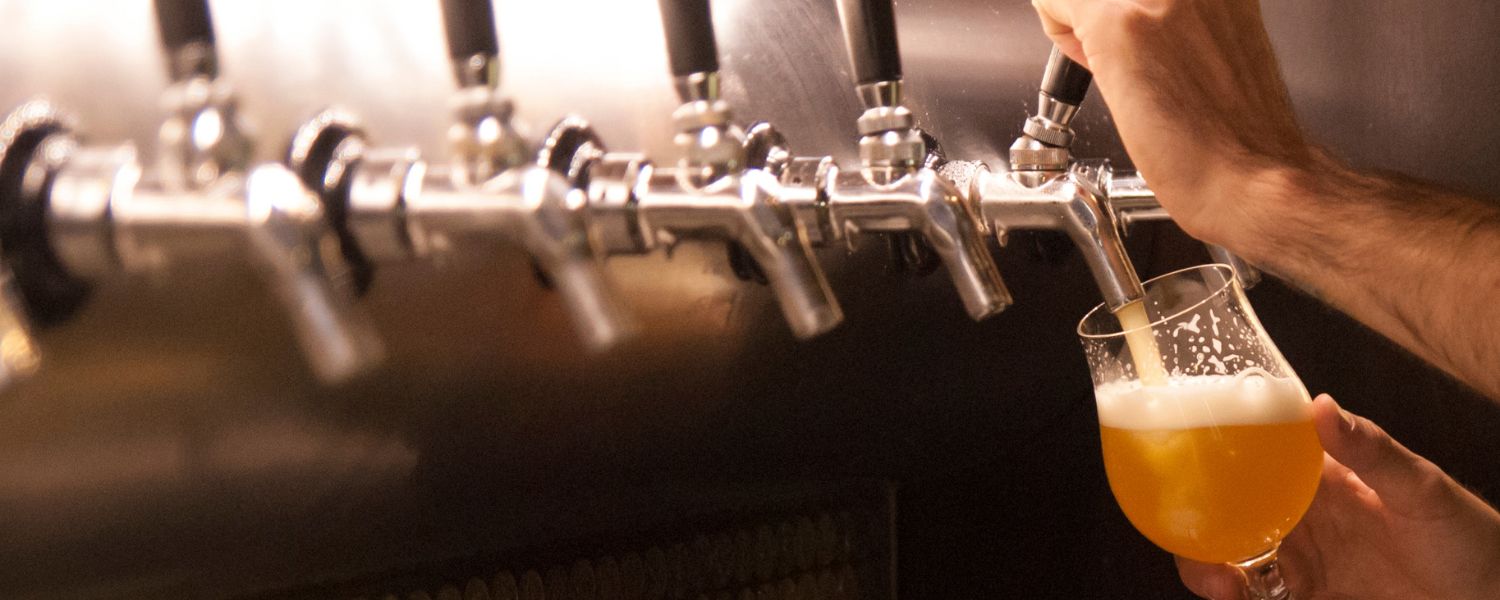
Which gas should you have for your beverage program: carbon dioxide (CO₂) or nitrogen?
Most drinks served on tap need gas, whether it’s a draft beer or a kegged cocktail. Most draft beverages rely on a gas cylinder—a tall aluminum or steel tank with a valve at the top—to provide the pressure and carbonation that keeps drinks flowing.
And it might seem inconsequential to decide between gases, but the choice between CO₂ cylinders and nitrogen cylinders can significantly impact the taste, texture, and consistency of your tap beverages.
Whether you should opt for CO₂ cylinders or nitrogen cylinders depends on your beverage program, system setup, and customer experience goals.
Soda, Beer, and Sparkling Water: Where CO₂ Cylinders Thrive
Most taps run on CO₂ through a pressurized tank filled with liquid carbon dioxide. When released, that CO₂ turns into gas, giving drinks their bubbles or pushing them smoothly through the draft lines.
It’s easy to see how carbon dioxide affects drinks if you’ve ever had sparkling water. Sparkling water tends to feel crisper and effervescent than flat water.

CO₂ cylinders are generally used for drinks like the above-mentioned sparkling water, soda, and most beers, giving them a clean and crisp taste that feels light and fizzy—some people note that CO₂ can heighten acidity. CO₂ cylinders are easy to fill since carbon dioxide is readily available.
However, carbon dioxide isn’t necessarily right for all beverages. Some drinks require a gas that creates a smoother and silkier mouthfeel. That’s where nitrogen comes in.
CO₂ gas is optimal for: beer, soda, and sparkling water. Explore Foxx’s selection of CO₂ cylinders here.
Smooth Coffees and Stouts: Nitrogen Cylinders Deliver
Nitrogen is a trickier gas to work with than carbon dioxide. It doesn’t dissolve as easily into beverages as CO₂, and the bubbles produced are smaller, making drinks infused with nitrogen feel creamy rather than effervescent. Nitrogen also doesn’t give drinks any sharpness or acidity: instead, it makes drinks feel silky and smooth.
Most beers are carbonated with CO₂, except for one famous exception: stouts. Stouts are usually infused with nitrogen, which gives them that characteristic cascading quality (here’s a video of what that cascade looks like, just in case you’ve never seen it).
Nitrogen is ideal for stouts because CO₂ can affect the flavor of the beer, maintaining the mellow, malty flavor that stouts are known for. Because it doesn’t mess with the flavor, nitrogen is also ideal for kegged cocktails and coffee.
Because nitrogen isn’t as common as CO₂, adding it to a bar or restaurant tap can be a differentiator that creates a premium drinking experience. However, it’s simply not as strong at carbonating as CO₂, so it might not work for drinks that need a high level of carbonation.
Nitrogen gas is optimal for: stouts, cocktails, and coffee. Explore Foxx’s selection of nitrogen cylinders here.
When Two Cylinders are Better Than One
Deciding between CO₂ and nitrogen isn’t always a singular choice: many bars have both gas sources, especially beer-forward bars.
Some beverage systems utilize both gases together. Mixing the gases can prevent over-carbonation, maintain foam, and improve taste stability.
We discussed the ideal beverages for each of the specific gases, but most spaces serve all the drinks we listed. So a mixed gas system makes sense for restaurants, bars, and coffee shops that serve a variety of beverages.
There’s no one ideal situation for one gas or another: it depends on what your bar or restaurant plans to serve. However, understanding what each gas does is vital in making informed decisions about the type of cylinders you’ll need. Remember: CO₂ makes drinks fizzy, crisp, and bubbly while nitrogen gives drinks a smooth and silky mouthfeel.
With the knowledge of what each gas does, you can make smart decisions about what you need for your operation. For example, maybe most of your drinks require CO₂, so a 50-lb CO₂ cylinder makes sense, supplemented by a 2.5-lb nitrogen cylinder.
Explore Foxx Equipment’s selection of CO₂ cylinders and nitrogen cylinders to find the best fit for your system.



Leave a Reply